
Atlantic hurricane season officially runs from June 1 through November 30, and while Charlotte sits 200 miles inland, we catch the remnants of these systems almost every year. Hurricane Hugo in 1989 remains the benchmark — it arrived in Charlotte still carrying hurricane-force winds and took down an estimated 80,000 trees in Mecklenburg County alone. More recently, the remnants of Hurricane Helene in 2024 devastated trees across western North Carolina. The good news: most storm tree failures are predictable and preventable. The trees that come down usually showed warning signs months before. Here is the preparation checklist we recommend to every Charlotte homeowner in June.
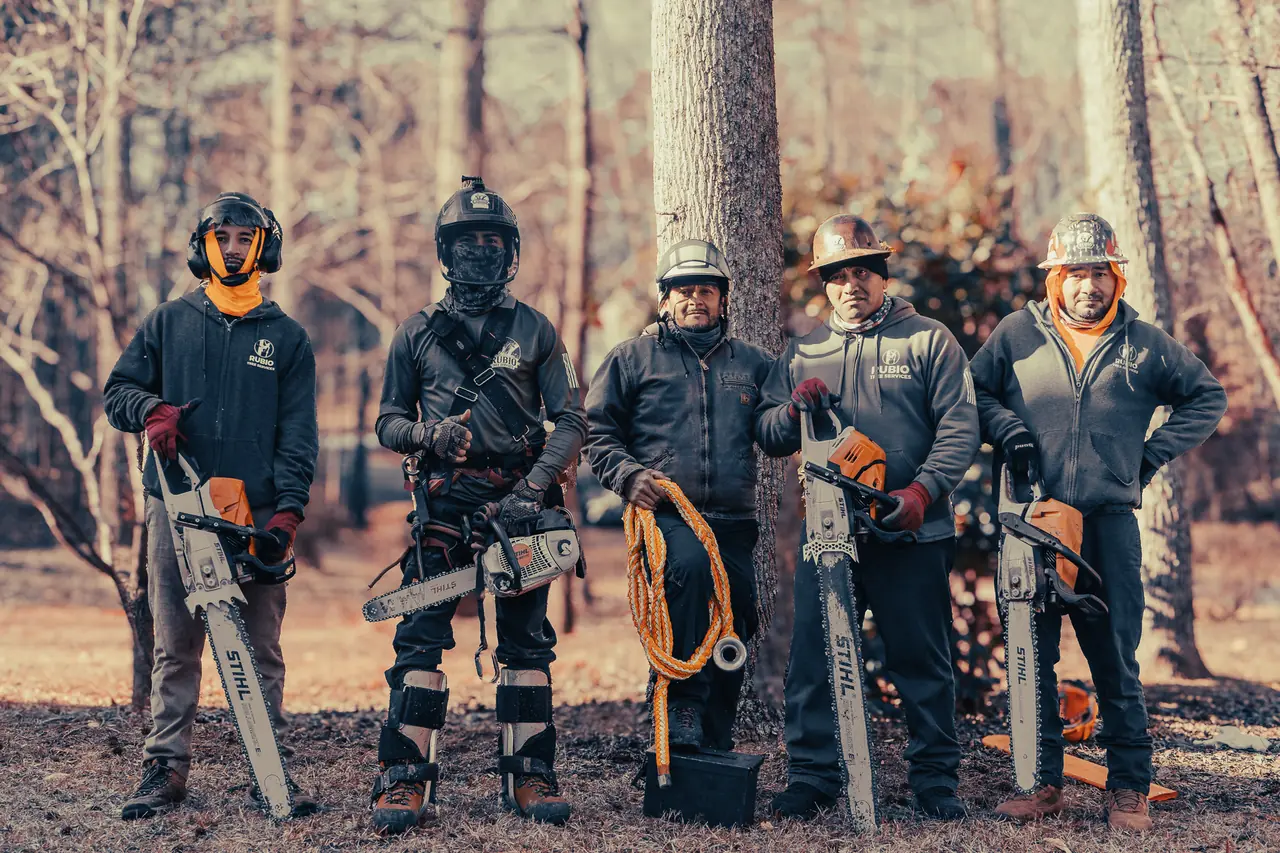
Storm damage cleanup in the Charlotte area
Why June Is the Right Time — Not September
When a named storm enters the forecast, every tree service in Charlotte books out instantly, and emergency rates apply after the storm hits. Inspecting and pruning your trees in early summer means you get scheduled at normal rates, the work is done calmly and correctly, and your trees have time to seal pruning cuts before peak storm months in August and September.
6 Steps to Storm-Ready Trees
- 1Walk your property and look up. Check every large tree within falling distance of your house, driveway, and power lines. Note dead limbs, cracks, and anything hanging.
- 2Check the base of each tree. Mushrooms or fungal shelves growing at the trunk base, heaving soil, or exposed damaged roots are signs of root decay — the #1 cause of whole-tree failure in storms.
- 3Look for co-dominant trunks. Trees with two main trunks forming a tight V are far more likely to split in high wind. These can often be cabled or reduced instead of removed.
- 4Thin the canopy, don't top it. Selective pruning lets wind pass through the crown instead of pushing against it like a sail. Never let anyone 'top' your trees — topping creates weak regrowth that fails in the next storm.
- 5Remove the dead and the dying. Dead limbs are the first thing a storm throws at your roof. Standing dead trees should come down before storm season, on your schedule, not the storm's.
- 6Document your trees. Take dated photos of healthy trees near your home. If a storm causes damage later, this documentation helps enormously with your insurance claim.
Warning Signs That Need a Professional Assessment Now
- •A lean that has gotten noticeably worse over the past year
- •Cracks in the trunk or where large limbs attach
- •Large dead sections in the upper canopy
- •Mushrooms or conks growing from the trunk or root flare
- •Soil lifting on one side of the tree after windy days
- •Limbs overhanging the roof, driveway, or service drop from the power line
Free Storm-Readiness Assessment
Not sure whether a tree is a risk? We walk Charlotte-area properties and give a straight answer about which trees need work and which are fine — free of charge. One assessment in June can save you a roof in September. Call (980) 225-4708.
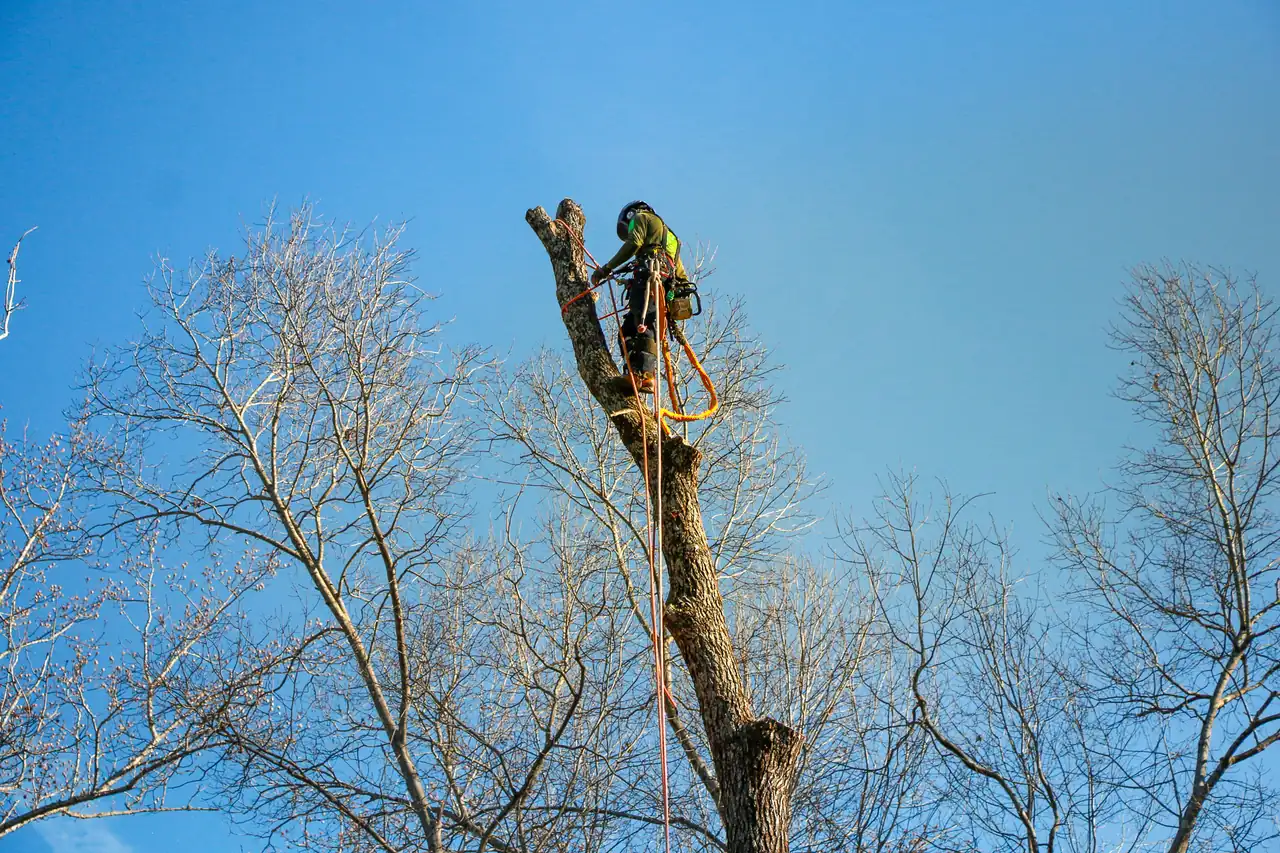
Structural pruning reduces wind resistance
What About Pines? A Charlotte-Specific Warning
Loblolly pines are the most common storm casualty in the Charlotte metro. They are tall, shallow-rooted relative to their height, and often grow in groups that protect each other — until a neighbor's pine is removed and the remaining ones suddenly face wind they have never experienced. If construction or removals have recently exposed your pines, have them evaluated. Saturated soil from the heavy rain that precedes hurricane remnants makes pine root plates fail even in moderate wind.
If a Storm Is Already Coming
Once a storm is within a few days out, large preventive work is no longer realistic — crews are securing equipment and emergency queues are forming. At that point: photograph your property, move vehicles away from large trees, secure loose outdoor items that become projectiles, and save our number. After the storm, never touch limbs tangled with power lines and be wary of 'storm chaser' crews going door to door without insurance or local references.
Learn more about hurricane preparedness and seasonal outlooks from NOAA's National Hurricane Center.