
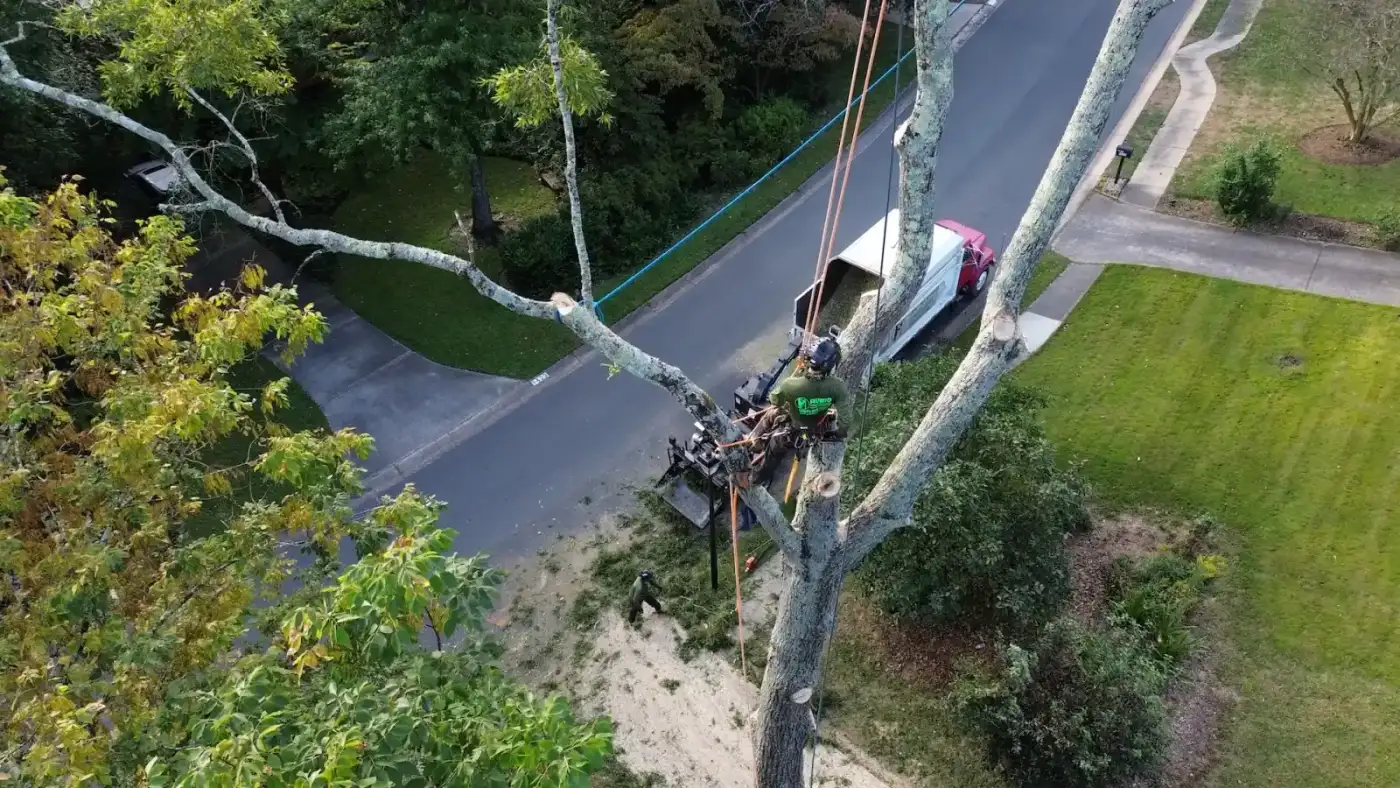
When the leaves fall and temperatures drop, most homeowners stop thinking about their trees. But here's a secret that professional arborists know: winter is actually the best time to prune most trees in North Carolina. Whether you're in Charlotte, Raleigh, or anywhere in the Carolinas, understanding why winter pruning is so beneficial can help you keep your trees healthy and beautiful for years to come.
See Our Team in Action
Trees Are Dormant in Winter
During winter, deciduous trees (those that lose their leaves) enter a dormant state. Their metabolism slows down, sap flow decreases, and they're essentially in a resting phase. This dormancy makes winter the perfect time for pruning because the tree isn't actively growing or trying to heal wounds while also supporting leaves, flowers, or fruit.
Best Timing
In North Carolina, the ideal window for winter pruning is typically from late December through February, before trees start producing spring buds. Avoid pruning during extreme cold snaps below 20°F.
Better Visibility Without Leaves
One of the most practical reasons for winter pruning is visibility. Without leaves blocking the view, arborists can clearly see the tree's entire structure—every branch, every crossing limb, and any problem areas. This allows for more precise cuts and better overall shaping.
What We Can See More Clearly in Winter:
- •Dead or dying branches that need removal
- •Crossing branches that rub against each other
- •Weak branch unions that could fail in storms
- •Disease or pest damage that was hidden by foliage
- •Overall tree structure and balance
Reduced Disease and Pest Risk
Many tree diseases and pests are dormant or less active during winter. Fungi, bacteria, and insects that might infect fresh pruning wounds are largely inactive in cold temperatures. This means pruning cuts made in winter have a much lower chance of becoming infected compared to cuts made during the growing season.
This is especially important for trees susceptible to oak wilt, Dutch elm disease, or fire blight—diseases that spread rapidly through open wounds during warm months. In the Charlotte area, where oak trees are common landscape features, dormant pruning is one of the best ways to reduce disease risk.
Promotes Vigorous Spring Growth
When you prune a tree in winter, you're removing dead or unwanted growth before the tree channels its energy into spring growth. Come springtime, the tree can direct all its stored energy toward new, healthy growth rather than maintaining damaged or unnecessary branches.
Spring Growth Boost
Trees pruned in winter often show 10-20% more vigorous spring growth compared to unpruned trees or those pruned during the growing season.
Less Stress on the Tree
Pruning is inherently stressful for trees—it creates wounds they need to seal and recover from. During the growing season, trees are already working hard to produce leaves, flowers, and fruit while fighting off pests and diseases. Adding the stress of pruning on top of all that can weaken the tree.
In winter, the tree can focus solely on healing pruning wounds without the competing demands of active growth. By the time spring arrives, the wounds have already begun to compartmentalize, and the tree is ready to grow.
Easier Access and Less Property Impact
Winter conditions often make tree work easier and less impactful on your property. The ground may be firmer (when not muddy), there are no flowers or vegetable gardens to worry about damaging, and the absence of leaves means less cleanup. Our crews can also work more efficiently when they can see exactly what they're doing.
Which Trees Should Be Pruned in Winter?
Ideal for Winter Pruning:
- •Oak trees (especially important to avoid oak wilt)
- •Maple trees
- •Elm trees
- •Most shade and ornamental trees
- •Fruit trees (apples, pears, peaches)
- •Crape myrtles
Note: Some trees, like spring-flowering species (dogwood, redbud, cherry), are best pruned right after they flower. Our arborists can advise you on the best timing for your specific trees.